Before you begin

Even though independent inventors/designers are an important source of new product ideas, they often find the toy industry difficult to penetrate. Although the statistics can be daunting, in time and with persistence on your part, a good idea – one that is fully developed to a point where it is presentable in either complete drawings, sketches or prototype format and is legally protected – will be seen.

To realistically calculate your chances of success before entering into a time consuming, and possibly costly effort, you should make an honest evaluation of your personal circumstances as well as your invention.

Is it unique?

You must be sure the item you have invented, or something very similar to it, is not already in existence. More than 40,000 new toy products are introduced each year by about 350 UK manufacturers which employ their own salaried research and development specialists. Independent professional inventors use their personal contacts to sell their ideas to toy companies and design firms. A smaller number of independent inventors manufacture and distribute through their own companies.

Thoroughly research the toy industry at the retail level to see what is currently on the market. Visit as many outlets as possible that sell toys, including large toy chains and small corner shops; discount stores; catalogue showrooms; bookstores; etc.

A good time to do this is in the late summer or early autumn when most new products have arrived at retail stores for the holiday shopping season.

Is it cost-effective?

The product must be able to be manufactured at a reasonable cost to allow a competitive retail price within its category and to ensure a profit. Your initial research at toy outlets should provide a good idea of price range within the product’s category and a rough prototype is important, too, for presentation purposes if you are trying to sell your item to a toy manufacturer.

Some prototypes, such as one for a board game, can usually be made at home. But some toys, such as those requiring custom-made moulds or pattern designing, may require professional input. To determine the manufacturing cost, you will have to research suppliers and contractors for production cost estimates. For example, if you want to produce a board game, you will need to price printing, spinners, timers, tokens, boxes, assembly, and so on. For a stuffed animal you need fabric, stuffing, accessories: eyes, nose, mouth, voices, squeakers, musical movements, assembly, stitching, etc. Most plastic toys are compression, extrusion, injection, rotational or blow moulded, which usually require a custom-made mould. Wooden toys, because they usually require a great deal of custom handwork and high-priced raw materials, can be quite expensive to produce.

Avenue B – Selling Your Invention

How do you find someone interested in purchasing your idea? Most toy manufacturers who seek new product inventions from outside will purchase ideas from toy design firms, which employ professional designers, and from independent professional designers and toy agents who they have worked with in the past. Professional designers have fully developed skills, and design firms and agents are usually knowledgeable about a company’s needs. Some manufacturers will purchase an outside idea only after the item is actually on the market and has demonstrated consumer appeal and sales.

Many manufacturers do not accept outside ideas for a variety of reasons. Larger manufacturers have their own professional design staffs and do not rely on new product ideas from independent inventors. It is also faster and easier for in-house professional designers to develop new versions of trendy toys. Lawsuits are another reason; on occasion, a company’s own research and development staff are already working on an idea similar to one that has been submitted by an independent inventor and a conflict arises as to the idea’s originator, which is why agents are sometimes required in the process.

Is it legally protected?

Most companies will not look at outside ideas unless an application for protection has been obtained.

There are different forms of IP protection including: designs, trade marks, patents, and copyright. The below information is intended to act as an introductory guide to the legal protections available. It is always recommended however that specific advice is sought on a case-by-case basis.

  • Designs protect the appearance of a product, particularly its shape or patterns. Some design rights automatically come into existence when a qualifying work is created and these are known as unregistered design rights. It is also possible to obtain registered design rights.
    • There are two types of unregistered design right available in the UK. The first, called UK Unregistered Design Right (“UKUDR”), protects the shape and configuration of a design and lasts between 10 and 15 years depending on when the design was first recorded/created and marketed. The other type, called Supplementary Unregistered Design Right (“SUDR”) was created after Brexit and provides a broader scope of protection. SUDR, for example, protects surface pattern and ornamentation that is not protected by the UKUDR. SUDR lasts for three years from first disclosure in the UK. In order to enforce either type of the unregistered design rights, the owner will need to prove that the infringing party has copied its design, which can be a tricky hurdle to overcome.
    • Other design rights need to be registered and are known as registered design rights. Registered design protection can last for a maximum of 25 years in the UK and rights holders are not required to show their design has been copied in order to enforce the registered design.
  • Trade marks protect brand names, logos or anything by which a consumer may identify a product or service.
    • Trade marks can be registered with the UK Intellectual Property Office. UK trade mark registrations can be renewed indefinitely in ten year periods and so provide useful long-term protection against those who try to use the same or similar mark for the same or similar goods.
    • Unregistered trade marks are also recognised and enforceable in the UK under the law of passing off. It is however generally more burdensome and costly to demonstrate the existence of unregistered trade mark rights over registered marks which are entered onto the UK trade mark register.
  • Patents protect inventions that are new, inventive and are usually either something that can be made and used, a technical process, or a method. The process of applying for a patent in the UK is rigorous and can be quite lengthy (several years) but patent rights provide robust protection for up to 20 years.
  • Copyright protects artistic works (such as illustrations) and exists automatically when a qualifying work is created. Copyright in the UK lasts the lifetime of the author + 70 years for most types of work.

Other considerations

You can consult an attorney who specialises in IP law to provide advice regarding the IP protection available to you and if appropriate assist in obtaining registered protection, for a fee. It is possible for anyone to apply for registered IP protection without requiring legal representation. However, IP law is complex and so it is recommended to seek advice to ensure the right forms of protection are being pursued.

Whilst considering what IP protection is necessary for your creation, it is important that you document your idea and put the original documentation in a safe place. You may want to keep an ‘invention ledger’: a bound notebook to record all pertinent information regarding the steps you have taken to protect your idea, a file for legal documents, sales receipts etc. Keep this ledger up to date. Include a description and sketch of the product, its elements and how it works. If you make a prototype, photograph, or video it and keep a copy with the ledger.

If you have disclosed your invention, it is also worth keeping a record of when and to whom you disclosed it. This is important to determine what IP rights you have and when those rights will expire. Bear in mind that in the UK, registered design protection is only available for designs that were publicly disclosed less than a year ago. If you wish to make your design available in the UK and EU, thought needs to be given to where and how the design is first disclosed to ensure the design can benefit as much as possible from unregistered protection. An IP attorney can provide further advice on this.

IP protection registered in the UK is limited to this jurisdiction. If you intend to make your invention available outside of the UK, you should seek advice regarding the specific IP protection that is available in the countries of interest.

For further information visit Intellectual Property Office
Character licensing of toys

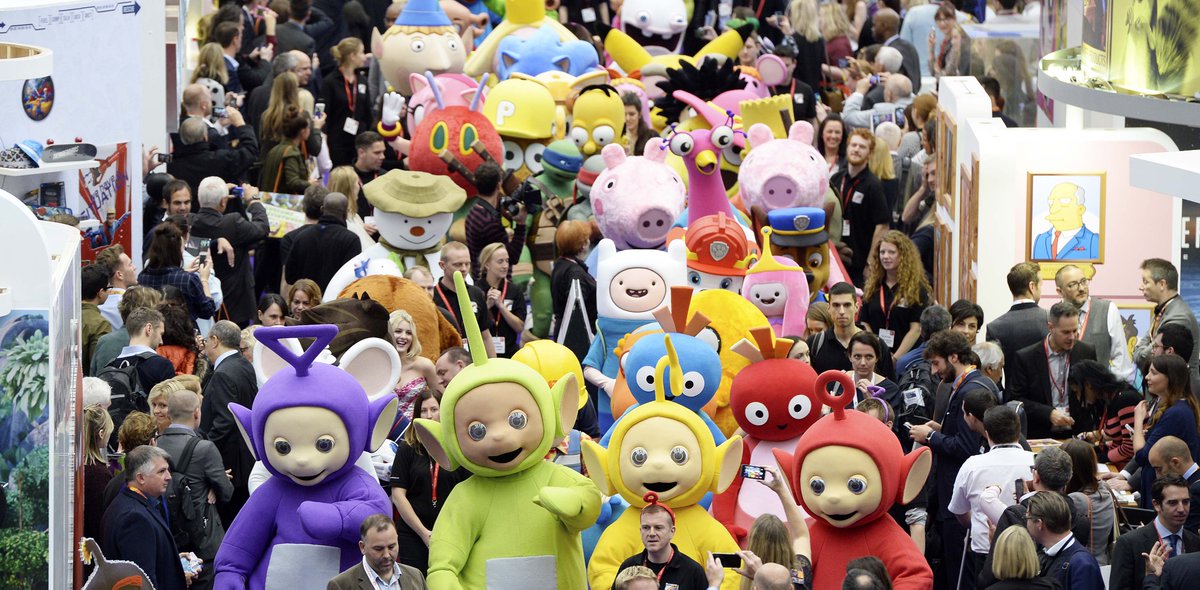
You may wish to use a character in or on your new design. The character licensing industry generates a worldwide income of more than $70 billion yet it remains a mystery to the majority of people not directly involved in it. Put simply, it is the use of a character to promote a product or service. Characters, be they cartoons, film-based or those that have originated from books or comics, are IP and like all property they have an owner. Whether the owner created the property or otherwise acquired the rights, they are the only ones who are ultimately able to permit use of that character for licensing purposes.

The rights holder is known as the licensor and the individual or company who wish to make use of the character in conjunction with their product, is known as the licensee.

Often a licensor will choose to work through an agency such as The Copyright Promotions Licensing Group, who will then handle the business of selecting licensees most appropriate to their client’s character. As the licensing business has become more specialist, so agencies have improved their business to offer services such as artwork approval, which ensures that the visual integrity of the characters is maintained and, in the case of larger agencies, design and PR functions. A good agency will ensure the best interest of their client’s character is maintained by ensuring that it is not over licensed and that licences are granted to a broad range of suitable licensees.

Product Licensing

With innovation driving the industry, there are many companies continually looking out for new and original ideas. While there will always be a need for major manufacturers to have in-house designers, it is more likely that ‘off-the-wall’ inventions will come by strange and unusual routes to market.

Many people confuse character licensing with product licensing. Product licensing grants a right to exploit a unique and original concept. Character licensing is the application of a character logo or brand which has public awareness and is applied to a product in order to increase sales.

A new toy idea can itself develop into a character licensing opportunity as a result of its easy recognition and heritage. Sometimes a manufacturer uses a product licence together with a character licence to give it instant recognition and bolster initial sales.